DRAG

10 Days Lake Turkana & the Chalbi Desert Jade Sea 4×4 Expedition

  • Home
  • Trip
  • 10 Days Lake Turkana & the Chalbi Desert Jade Sea 4×4 Expedition

10 Days Lake Turkana & the Chalbi Desert Jade Sea 4×4 Expedition

Every safari route in Kenya has a tarmac thread. This one runs out of it on the second day. North of Isiolo the road stops pretending: dust, lava rock and dry rivers all the way to the lake the Romans never mapped and the maps call Jade. This is a proper expedition — a convoy of purpose-built 4x4s, a support truck carrying camp, kitchen and cold drinks, a crew of drivers, mechanic and cook, and satellite communication the whole way. The route assembles Kenya’s most extreme scenery into one loop: the sacred flat-topped mass of Ololokwe, the mountain forest of Marsabit where elephants with tusks like church bells drink at a crater lake called Paradise, the white heat of the Chalbi — Kenya’s only true desert, crossed between oases — and then the reward that makes every corrugation forgotten: Loiyangalani on the jade-green shore of Lake Turkana, the world’s largest permanent desert lake, with a boat run to a volcanic island where Nile crocodiles breed in their tens of thousands. On the way home the country softens — camel country giving way to the Samburu highlands of Maralal, and finally Lake Baringo, where fish eagles argue over the boat’s wake and Rothschild’s giraffes graze a community island. Ten days, two deserts, one sea of impossible colour, and a Kenya almost no visitor ever reaches.

Trip Highlights

  • Cross the Chalbi — Kenya’s only true desert — between palm-fringed oases, in a convoy built for it
  • Boat across the Jade Sea to Central Island, a triple-crater volcano and one of the world’s great Nile crocodile nurseries
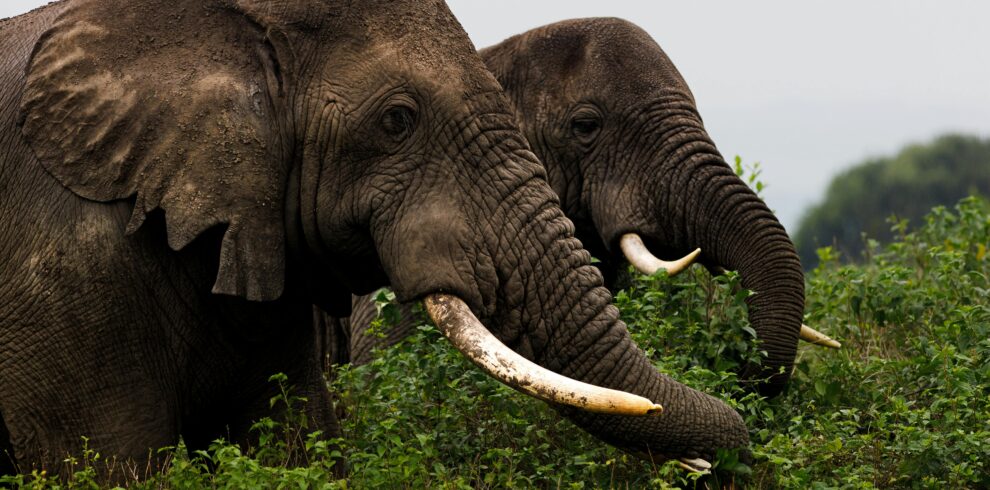
  • Dawn at Lake Paradise on Marsabit mountain, watching forest elephants with tusks of the old magnitude
  • Meet the El Molo of Loiyangalani — among Kenya’s smallest communities, fishers of the Turkana shallows
  • Walk the springs and forest ledges of Mount Kulal, a UNESCO biosphere rising straight from the desert
  • Stand beneath 365 turbines at Africa’s largest wind farm, spinning on the desert’s own wind
  • Camp and lodge through the Samburu highlands, including a night in Maralal, the frontier’s capital
  • Close the loop at Lake Baringo: fish eagles, crocodiles and Ruko’s island giraffes
  • Full expedition support — convoy, camp crew, chef, mechanic and satellite communications throughout

At a Glance

Duration 10 days / 9 nights
Destinations Nairobi → Samburu → Marsabit → Chalbi Desert → Lake Turkana → Maralal → Baringo → Nairobi
Travel Style Supported 4x4 overland expedition — convoy & camp crew
Activity Level Easy walking, long driving days — comfortable travel fitness
Best Season Jun – Oct & Jan – Feb (Dry — the desert is passable)
Ideal For Repeat-Africa travellers, photographers, overlanders & anyone who has done the classic parks

Day-by-Day Itinerary

Day 1 — Nairobi → Samburu

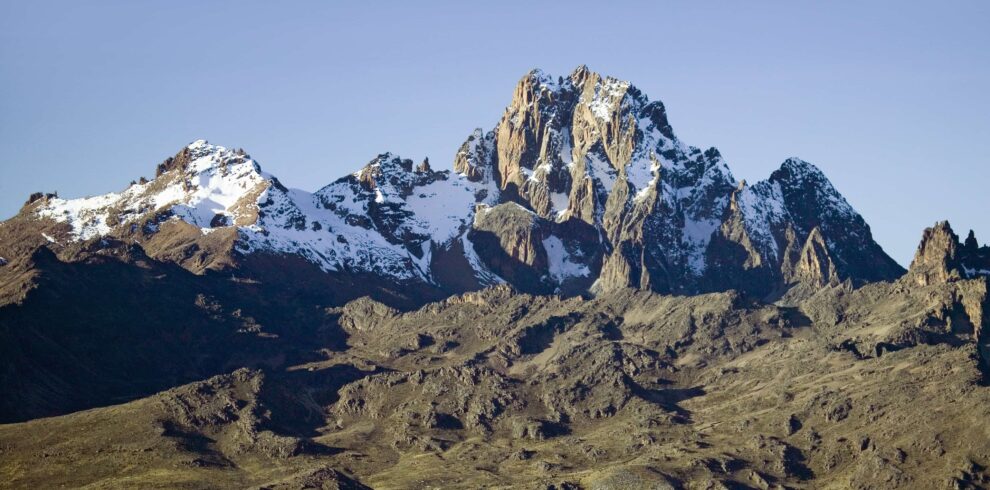
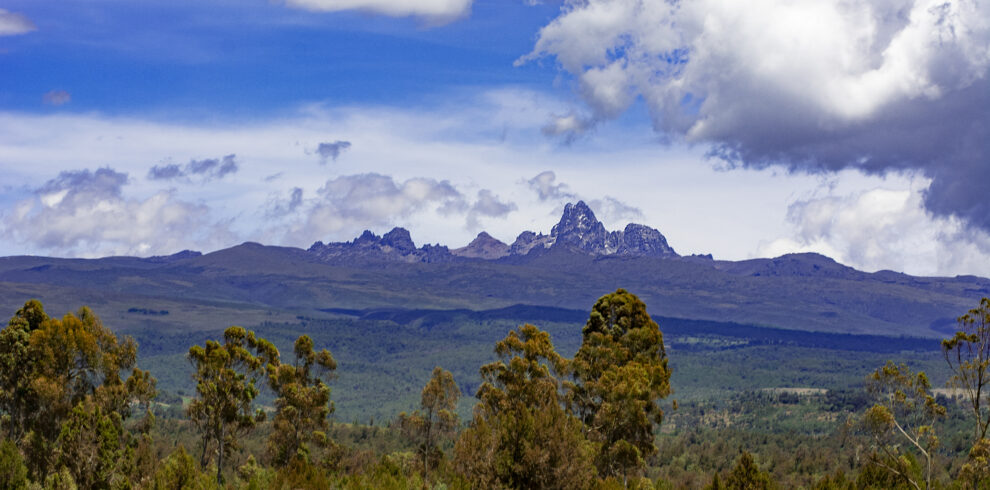
The expedition assembles at first light — vehicles checked, duffels loaded, convoy briefings done — and rolls north out of Nairobi while the city is still waking. The road climbs through Nanyuki’s ranch country, crosses the Equator at the foot of Mount Kenya, and turns to gravel somewhere past Isiolo with almost no announcement: one moment farms, the next thornbush and the mathematics of the dry season.

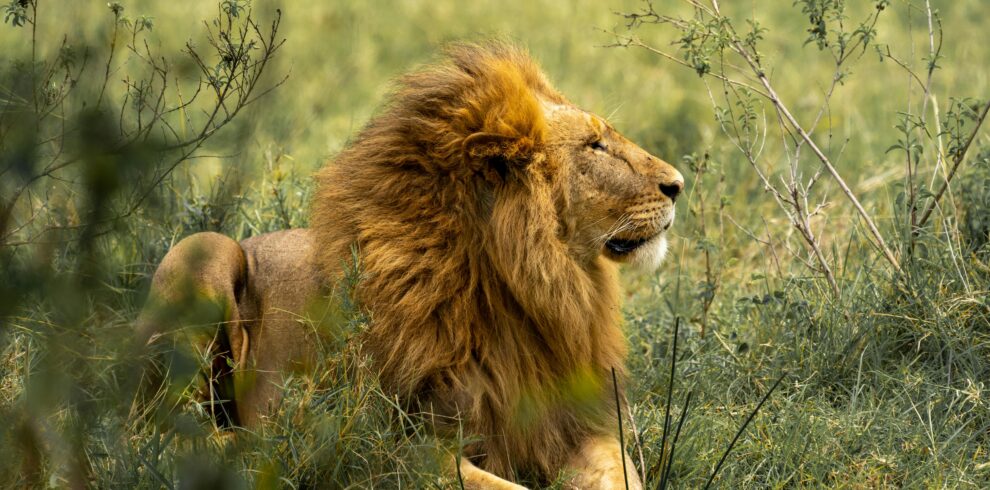
By afternoon you are in Samburu, and the expedition earns its first game drive — elephants against the doum palms, reticulated giraffe at the browse line, the Special Five’s opening act. End the day at a viewpoint beneath Ololokwe, the flat-topped mountain the Samburu hold sacred, as the sunset performs the first of many farewells.

Overnight: Sasaab (Luxury) / Samburu Sopa Lodge (Mid-Luxury).

The last comfortable morning in the last comfortable park: a short drive through Samburu’s riverine country, then north through Archer’s Post into country the guidebooks stop describing. The road runs through Laisamis and onto the Kaisut’s fringes — flat, ferociously hot, punctuated by herds of camels that appear like mirages and turn out to be entirely real.

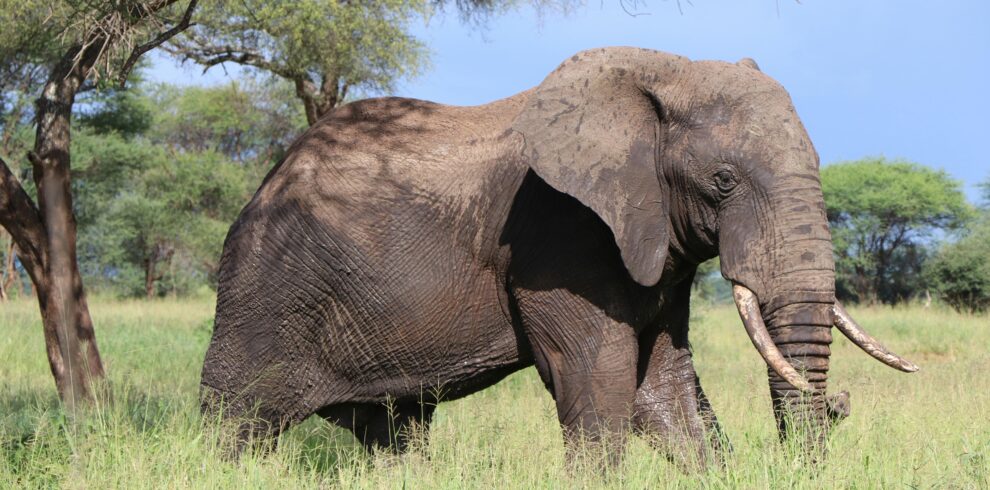
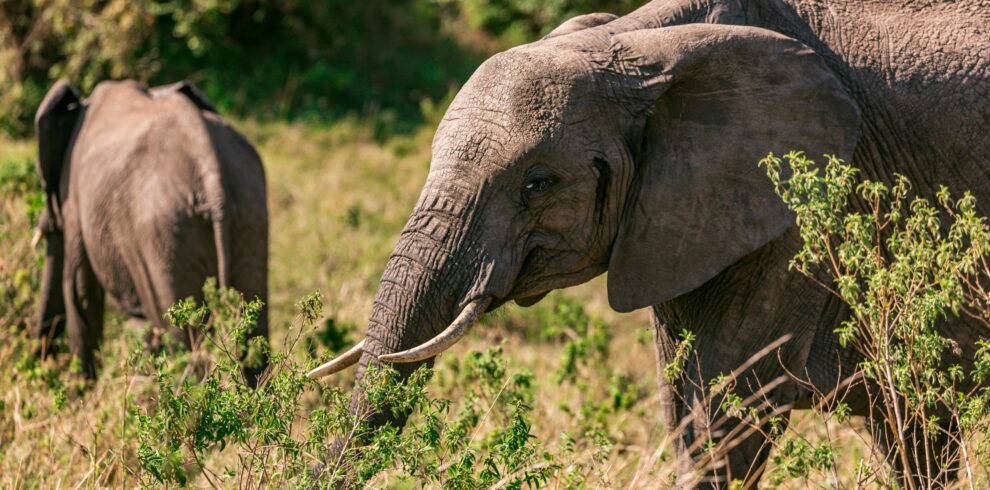
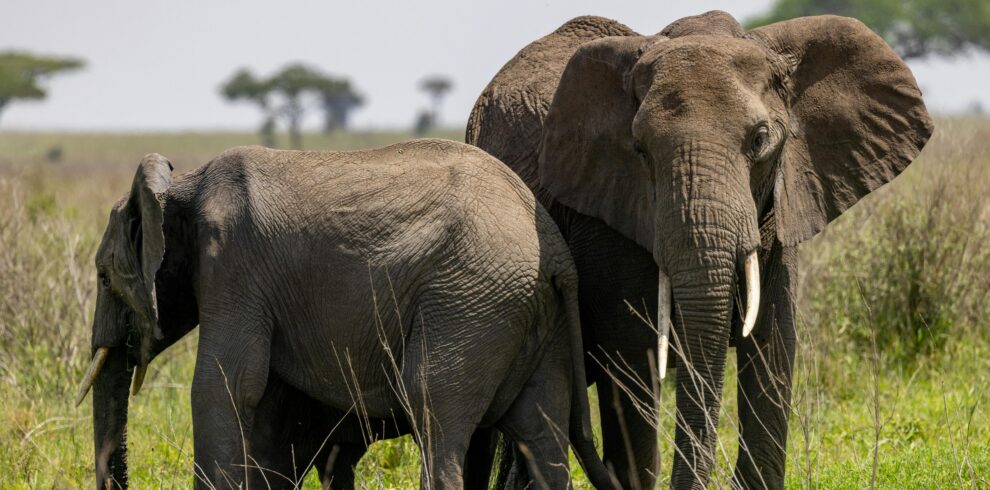
The surprise arrives at 1,700 metres. Marsabit mountain is a forested volcano rising out of the desert like a green afterthought, cool and dripping, its trees older than the towns below. By late afternoon you are driving its forest tracks to Lake Paradise — a double crater lake ringed by forest, and the stage for the mountain’s most famous residents: elephants of the old bloodlines, carrying tusks of a size that vanished from almost everywhere else in Kenya decades ago.

Overnight: Marsabit Lodge or expedition camp on the mountain (both tiers — the finest available; operations vary).

A dawn start with the mountain’s mist still in the trees — another circuit of the crater lakes for the elephants’ morning movements, with bushpig, buffalo and the beautiful, vanishingly rare bongo on the list of forest possibilities.

Then down the mountain’s northern face and onto the desert proper. The road to Kalacha crosses black lava flows and increasingly pale ground; by mid-afternoon the Catholic mission appears out of the heat like an exhaustively rumoured rumour — a walled garden of mango and papaya with bandas under the trees, staffed by hosts who have been welcoming overland expeditions for longer than most route maps have existed.

Cold drinks in the garden, the Gabbra herders passing on the track, and the first night under expedition canvas — camp beds, duvets, and a sky with no rival anywhere on the itinerary.

Overnight: Kalacha Mission bandas / expedition camp (both tiers).

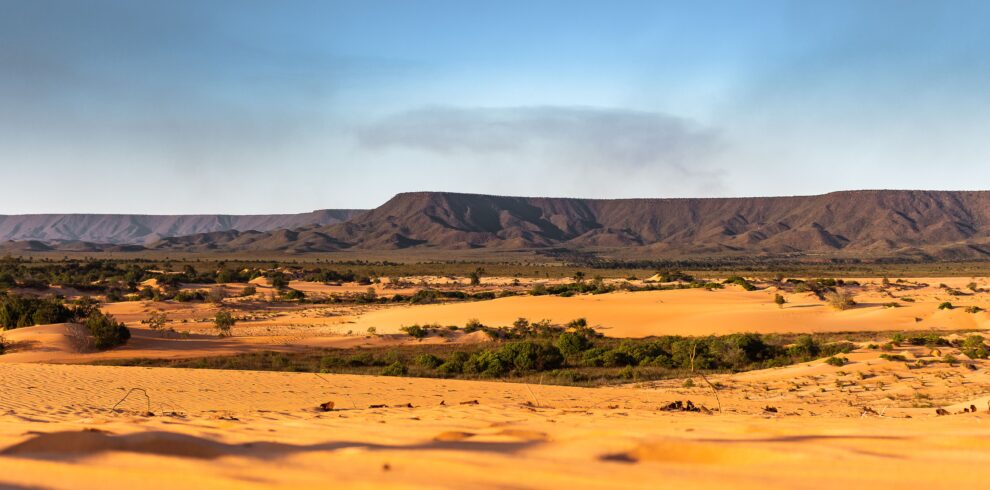
The day the trip is named for. North Horr first — an oasis town of doum palms and water channels where the Chalbi’s edges still grow dates — then the crossing itself: the salt pan running to the horizon in a glare that flattens distance and makes the convoy’s dust trail visible for half an hour behind you. In the rains this pan floods into a shallow inland sea; in the dry it is bone-white, wind-scoured and utterly hypnotic. Camels cross it. So, with respect, does the convoy.

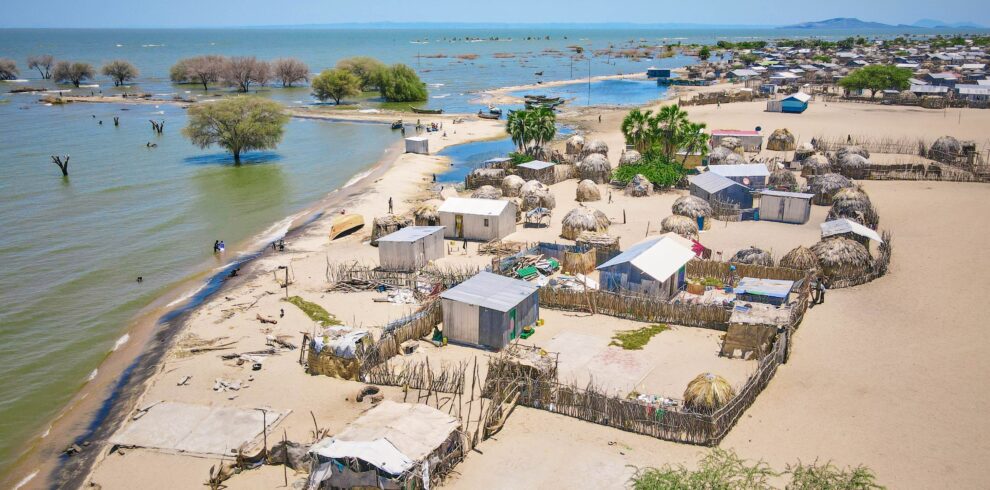
The far shore brings colour back — scrub, then lava, then the first astonished sight of the lake. Lake Turkana fills the world’s end in green: 250 kilometres long, the largest permanent desert lake and the largest alkaline lake on Earth, the colour earning it the oldest of all its names — the Jade Sea. The convoy drops onto its shores at Loiyangalani in time for the sunset to ignite the water, palm groves standing black against the light.

Overnight: Oasis Lodge lakefront rooms (Luxury) / Palm Shade Camp tents (Mid-Luxury).

A morning boat run across open water to Central Island, an active volcanic furnace of craters rising from the lake — one of the three national parks that make Lake Turkana a UNESCO World Heritage Site. Three crater lakes sit inside it: Flamingo Lake, green; Tilapia Lake, where the fish are relict and found nowhere else; and Crocodile Lake, which explains itself. The island’s beaches are one of the world’s great Nile crocodile nurseries — tens of thousands of the reptiles breed here — and from the crater rim the whole sea lies open below, wind-lashed and endless.

Afternoon on land: Loiyangalani’s Desert Museum, telling the intertwined histories of the lake’s peoples, and then a walk to the El Molo — fisherfolk of the shallows, among the smallest communities in Kenya, whose coral-stone and palm houses once stood on the lake’s islands. Tea with the village elders, a demonstration of the hand-built reed vessels, and the hardest currency of the north: time, spent properly.

Overnight: Oasis Lodge (Luxury) / Palm Shade Camp (Mid-Luxury).

The east side of the lake is dominated by Mount Kulal, a UNESCO-declared biosphere reserve whose springs and cloud forest rise out of the desert to 2,285 metres. With El Molo and Samburu guides, a half-day walk climbs through the mountain’s lower ledges — springs feeding palm groves, hawks riding the updraughts, and viewpoints that lay the entire Jade Sea open from a height the boat cannot give you.

Afternoon along the lake’s southern shore to Sarima, where the desert does something unexpected: 365 turbines of the Lake Turkana Wind Power project — Africa’s largest wind farm — turning the region’s fierce kaskazi winds into a third of Kenya’s electricity. Whatever your politics, 365 white giants against the desert sky is a spectacle, and a genuinely African one.

Final Jade Sea evening — the sunset performance is now a tradition, and the bar is high.

Overnight: Oasis Lodge (Luxury) / Palm Shade Camp (Mid-Luxury).

The homeward leg begins. South through Baragoi’s market country and up into the green folds of the Ndoto foothills, lunch in South Horr among Rendille and Samburu homesteads, and the long climb to Maralal — a proper frontier town, all dust-red streets, trading stores and livestock prices argued at volume, sitting at 1,700 metres where the air turns cool again.

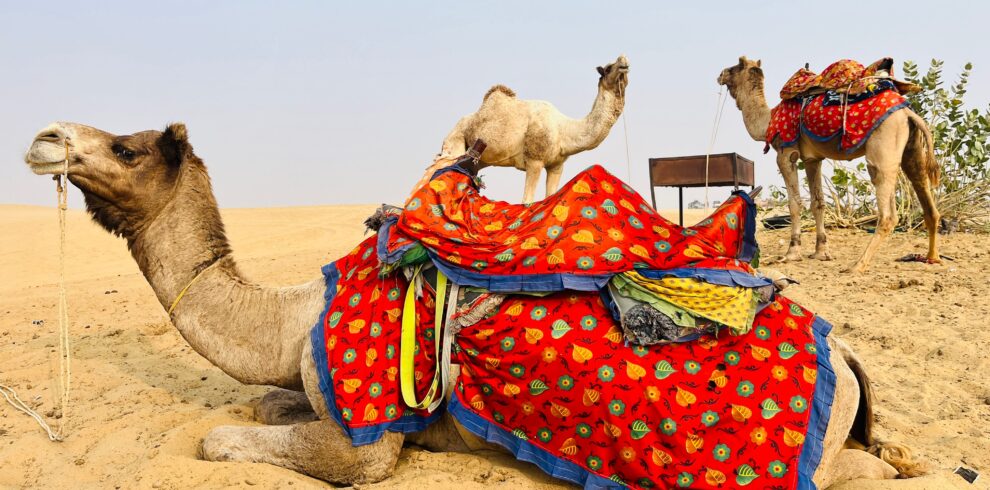
Maralal is camel country’s capital — home of the town’s famous annual derby — and the Yare camel club can arrange a short ride at the end of the driving day for anyone whose legs still want an opinion.

Overnight: Yare Safari Lodge or expedition fly-camp in the Maralal highlands (both tiers).

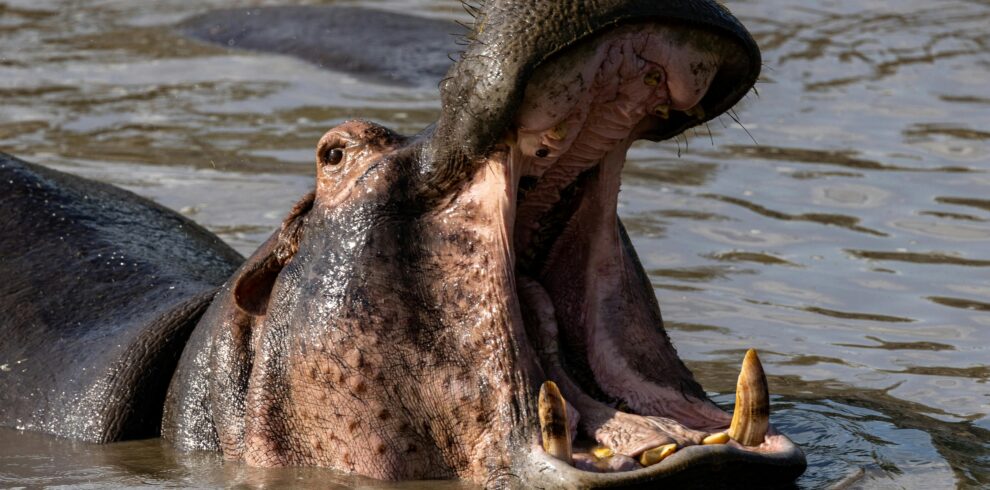
Down out of the highlands and west through Lorian’s swamp margins to Lake Baringo — a freshwater lake in the middle of nowhere, and one of the great birding addresses on the continent. Over 450 species have been recorded here; the resident fish eagles take up permanent microphone duty, and the lake’s crocodiles and hippos keep the boat skippers respectfully punctual.

Afternoon: a boat safari into the reeds and islands — fish eagles stooping to the skipper’s fish toss, Goliath herons standing their absurd ground, and the first cold drink of the evening taken with the lake turning gold.

Overnight: Samatian Island (Luxury) / Tumbili Cliff Lodge (Mid-Luxury).

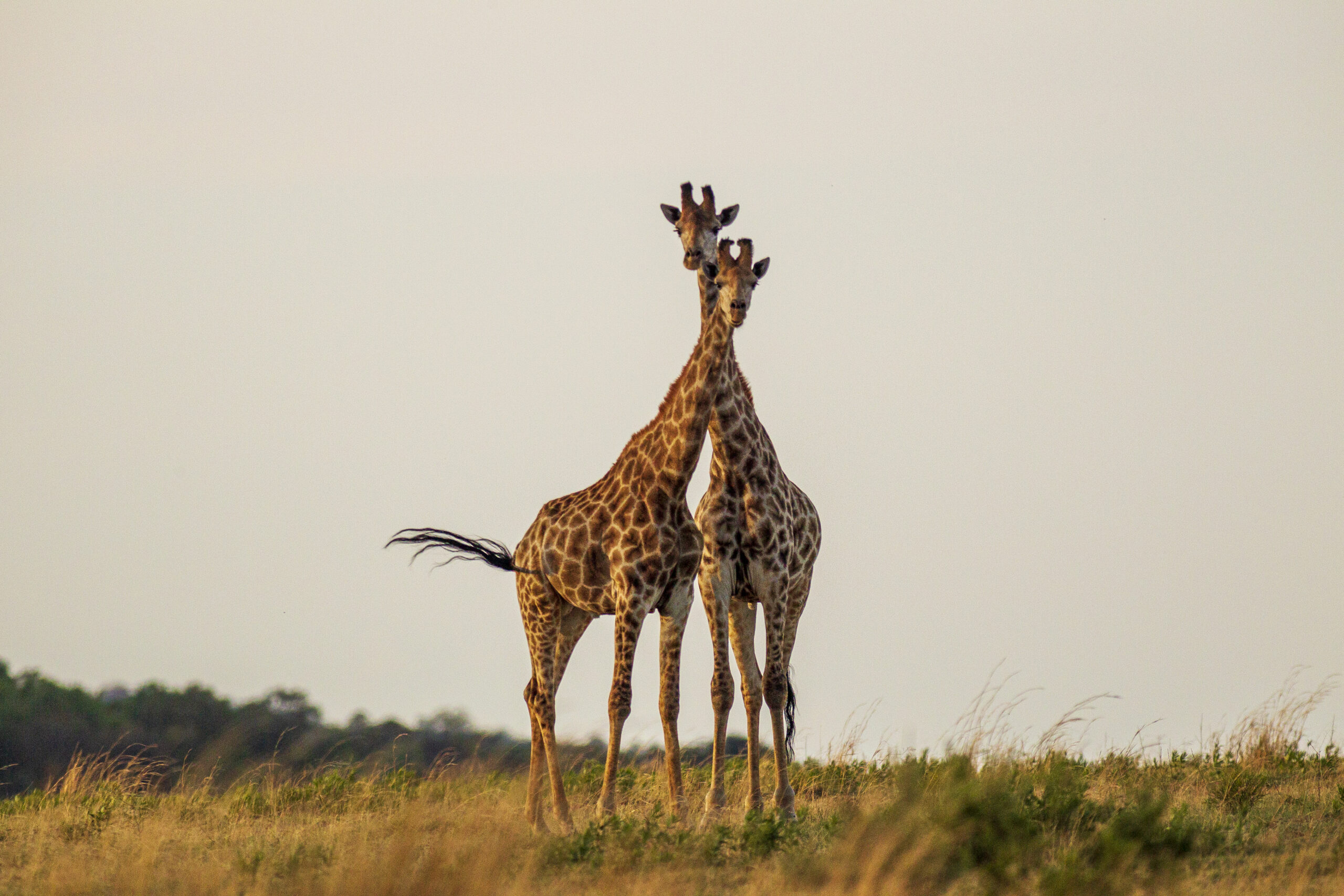
A full day on and around the lake, at walking pace for the first time in a week. Morning by boat to Longicharo Island in the Ruko Community Conservancy, where the community reintroduced Rothschild’s giraffe — among the world’s most endangered giraffes — and now watches the first island-born calves grow up. Meet the rangers, hear the story, and photograph a giraffe against open water: a sight possible nowhere else.

Midday: a Njemps village visit — the lake’s fisher-farmers — and the local birding that made Baringo’s name, on foot with the area’s sharp-eyed guides.

Afternoon options: a second boat, a swim, or — for those not yet desert-sated — an excursion south to Lake Bogoria, where geysers fire along the shore and flamingos gather by the tens of thousands. The expedition’s final dinner is taken beside the water, with the week’s photographs argued over at length.

Overnight: Samatian Island (Luxury) / Tumbili Cliff Lodge (Mid-Luxury).

The last drive south is almost civilised — tarmac reappears before Nakuru, the escarpment viewpoint delivers one final Rift Valley panorama as a closing argument, and Nairobi arrives by mid-to-late afternoon for onward flights. A day room or extra city night is arranged for evening departures.

Ten days ago the tarmac ran out. It comes back today, and you will notice it — the hum of a sealed road, the strangeness of streetlights, the quiet luxury of a chair that doesn’t drive. The north keeps its own calendar, and you have now seen it running. Few who travel Kenya can say the same.

Accommodation Options

Luxury Tier

Sasaab (West Gate Community Conservancy, Samburu) — Night 1 A Moroccan-influenced lodge overlooking the sacred mountain of Ololokwe, with private plunge pools and the space to remember you are leaving the comfortable world behind tomorrow.

Expedition Camp & best rooms en route — Nights 2–7 On Marsabit, the finest available accommodation on the mountain — typically the park’s own Marsabit Lodge, whose operations can be intermittent; when closed, our mobile camp takes its place on the mountain’s edge with proper camp beds, duvets, tin showers and a cook who treats the desert as a pantry. At Kalacha, the mission’s shaded garden bandas; at Loiyangalani, the best lakefront rooms at Oasis Lodge; en route home, a private fly-camp on the Maralal highlands. Luxury here means the expedition, minus every discomfort that can be engineered away.

Samatian Island (Lake Baringo) — Nights 8–9 A small private island retreat with the lake on every side — a genuine soft landing after a week of dust.

Mid-Luxury Tier

Samburu Sopa Lodge (Samburu National Reserve) — Night 1 Comfortable rooms around a waterhole courtyard — a sound first night before the tarmac ends.

Expedition Camp & lodges en route — Nights 2–7 The same route, the same real places: Marsabit Lodge or mobile camp on the mountain, Kalacha bandas, Palm Shade’s tents under the doum palms at Loiyangalani, and the fly-camp near Maralal. Every night a bed, every meal cooked by the crew, every shower hot where hot can be arranged.

Tumbili Cliff Lodge (Lake Baringo) — Nights 8–9 Cliff-top rooms above the lake with 450 bird species downstairs.

Optional upgrade (either tier): a private charter flight from Loiyangalani to Nairobi, flying home over the Chalbi while the convoy’s second half drives it — for travellers who want the north outbound but a shorter return.
Destination Essentials

Best Travel Season

June – October: The expedition’s prime season. The Chalbi is dry and passable, the desert nights are manageable, and the lake breezes keep Loiyangalani honest. Book early — convoy departures are limited.
January – February: Hot, dry and beautiful, with the lake at its clearest and the salt pan at its whitest. Expect serious heat mid-day; the crew times every crossing around it.

November – December: The short rains transform the Chalbi — the pan floods into a mirror shallow lake, spectacular to see and occasionally impossible to cross. Feasible only with a flexible schedule and a route plan that can redirect.

March – May: The long rains. Roads fail, rivers rise, and the route can close entirely. This itinerary does not run.

Samburu & the northern rangelands

  • Elephant, reticulated giraffe, Grevy’s zebra, gerenuk and Beisa oryx — the dry-country cast
  • Ololokwe, the sacred flat-topped mountain, at sunset

Marsabit National Park

  • Forest elephants of the great-tusked bloodlines, including the descendants of the legendary herds that made the mountain famous
  • Bongo — shy, striped and among Africa’s rarest antelope; buffalo, bushpig and giant forest hog
  • Lake Paradise and the mountain’s double crater lakes, at 1,700m in cool mist

The Chalbi Desert

  • Gabbra camel caravans on the move; oryx and gerenuk at the fringes
  • The salt pan at its mirror-white, horizon-erasing best
  • The oases of North Horr and Maikona — doum palms, date gardens and deep-well water

Lake Turkana & Central Island National Park

  • The Jade Sea itself — 250km of green water in the desert’s dead centre
  • Central Island’s three crater lakes and one of the world’s great Nile crocodile breeding colonies
  • Relict tilapia of Crocodile and Tilapia lakes, found nowhere else
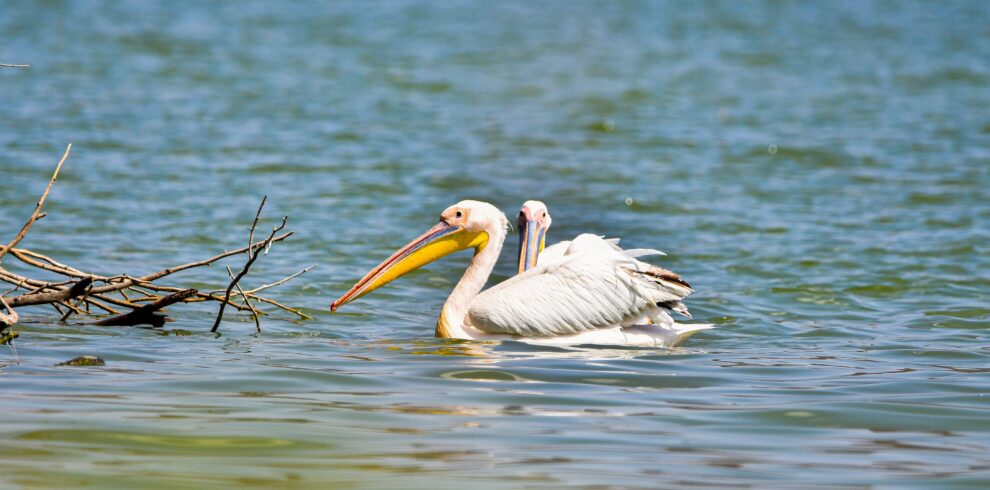
  • Flamingos, pelicans and terns working the shorelines; ospreys on migration
  • The El Molo and Turkana communities; the Desert Museum at Loiyangalani

Mount Kulal (UNESCO Biosphere Reserve)

  • Springs, palm groves and montane forest rising from the desert floor
  • Views over the whole lake from the walking ledges

Lake Baringo & Ruko Conservancy

  • 450+ bird species; the lake’s famous fish eagles, Goliath herons and crocodile-and-hippo boat country
  • Rothschild’s giraffe — island-reintroduced by the Ruko community, calves now island-born
  • Optional Lake Bogoria: geysers, boiling springs and flamingo gatherings

Easy: All game drives and boat excursions — seated, relaxed, open to all.

Easy–Moderate: The Mount Kulal walk — two to three hours on ledges and spring paths with a guide; walking on Central Island’s crater rim in heat; the Maralal camel ride.

The real demand: Long driving days (up to seven hours) on rough tracks, heat, dust and remote conditions. No trekking fitness is required — but an easygoing relationship with discomfort is the expedition’s only prerequisite.

Please note: All walking follows the crew’s lead; routes and access shift with conditions, security guidance and the desert’s own calendar, in that order.

What to Pack

Clothing

  • Lightweight, breathable layers for the heat — long sleeves are sun armour, not warmth
  • A warm layer and beanie: Marsabit and Maralal nights are genuinely cold at altitude
  • Sturdy sandals plus closed shoes; nothing white survives this trip — pack accordingly
  • Brimmed hat, buff or scarf (the Chalbi’s dust is a character in this story), quality sunglasses
  • Swimwear — oasis pools, the lake shallows and Baringo’s shores

Expedition Essentials

  • Soft duffel only — the convoy’s packing is part of its engineering
  • Binoculars; camera with a good dust habit: sealed bags, cloths, blower brush
  • Spare batteries and a power bank — charging happens at camp on the crew’s schedule
  • Headlamp; a bandana for Central Island’s spray and the pan’s glare
  • Wet wipes and hand sanitiser — the expedition’s true luxuries

Health & Wellbeing

  • High-factor sunscreen and lip balm — the equatorial desert sun is merciless
  • DEET repellent for the lake shores and oases
  • Malaria prophylaxis — consult your doctor or travel clinic before travel
  • Personal medication plus a compact first-aid kit; the crew carries a full expedition kit
  • Rehydration salts and something for motion on the corrugations

Documents & Admin

  • Passport valid six months beyond your travel dates
  • Kenya eTA — apply at etakenya.go.ke at least two weeks out
  • Travel insurance covering remote-area travel by road in northern Kenya — confirmed at booking
  • Copies of all booking confirmations

Frequently Asked Questions

Do I need a visa to enter Kenya?

Yes. Most nationalities require an Electronic Travel Authorisation (ETA). Apply online at etakenya.go.ke at least 2 weeks before travel. The fee is USD 30 for most nationalities.

Meru is one of Kenya’s least-visited major parks — and that’s exactly the point. You’ll rarely share a sighting with another vehicle. The wildlife is equally impressive to more famous parks, and the atmosphere is completely different. It’s safari as it should be.

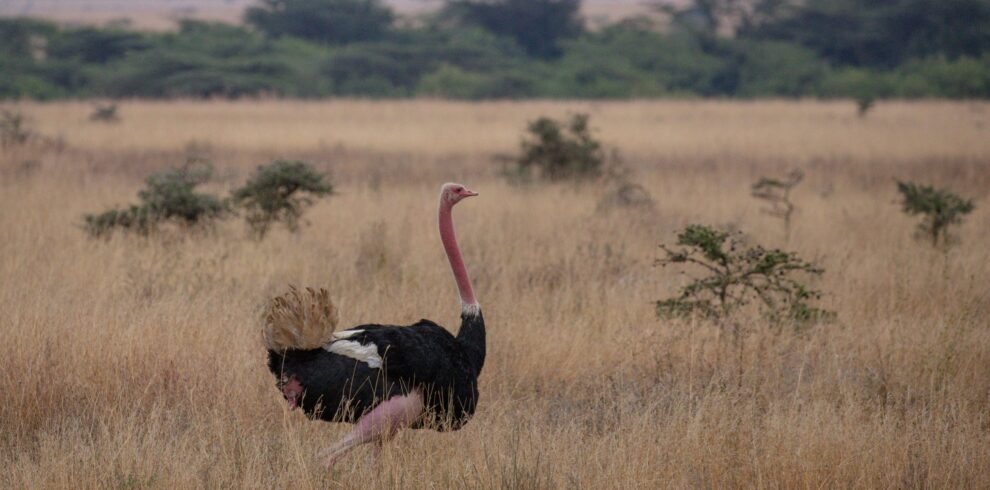
The Samburu Special Five — reticulated giraffe, Grevy’s zebra, gerenuk, Beisa oryx and Somali ostrich — are northern species not found in Kenya’s southern parks. They’re endemic to the arid north, making Samburu the only place in Kenya to reliably spot all five.

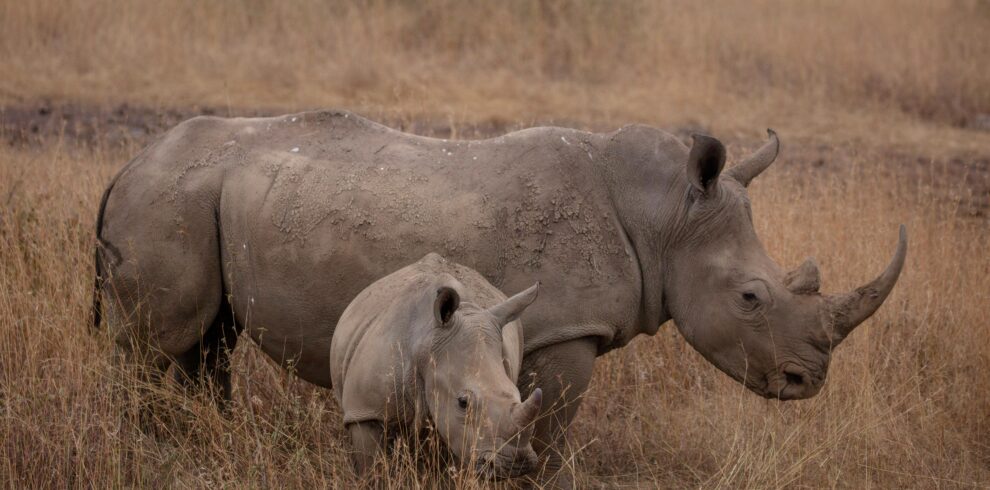
Yes — Ol Pejeta offers guided close-up encounters with Najin and Fatu, the world’s last two northern white rhinos. This is one of the most extraordinary wildlife experiences in Africa. Numbers are limited and advance booking is essential.

Nanyuki sits at around 1,900m altitude, so mornings and evenings can be genuinely cool, especially compared to Samburu or Meru. Pack a warm fleece or light jacket — you’ll thank yourself on early-morning drives.

Exceptional. Meru has over 300 species, Samburu over 450, and Ol Pejeta is equally rich. If you’re a birder, let us know and we’ll tailor the guiding accordingly.

Most light aircraft restrict luggage to 15kg (33lbs) in a soft-sided bag only — no rigid suitcases. This is a firm weight limit. All camps have laundry facilities so packing light is easy.

Yes. Game drives are suitable for all ages. Guided walks and rhino encounters are recommended for children aged 10 and above. Let us know in advance and we’ll adjust the pace and activities to suit your family.

The Kenyan Shilling (KES). USD is widely accepted at lodges and for tipping. Carry some cash for smaller purchases. ATMs are available in Nairobi and Nanyuki town.

Absolutely — this is our starting point, not a fixed route. We can add nights, swap lodges, combine with the Masai Mara or the coast, or build in specific experiences. Just tell us what you want and we’ll make it happen.

You can send your enquiry via the form below.

10 Days Lake Turkana & the Chalbi Desert Jade Sea 4×4 Expedition

Destination Type

Amboseli (5 Trips)

Chalbi Desert (1 Trip)

Diani Beach (2 Trips)

Kirisia Hills (1 Trip)

Lake Baringo (1 Trip)

Lake Bogoria (1 Trip)

Lake Naivasha (1 Trip)

Lake Turkana (1 Trip)

Marsabit (1 Trip)

Masai Mara (4 Trips)

Mathews Range (1 Trip)

Milgis Lugga (1 Trip)

Mount Kenya (1 Trip)

Activity Type