DRAG

6 Days Camel Walking Safari Ndoto Mountains & Karisia Hills

  • Home
  • Trip
  • 6 Days Camel Walking Safari Ndoto Mountains & Karisia Hills

6 Days Camel Walking Safari Ndoto Mountains & Karisia Hills

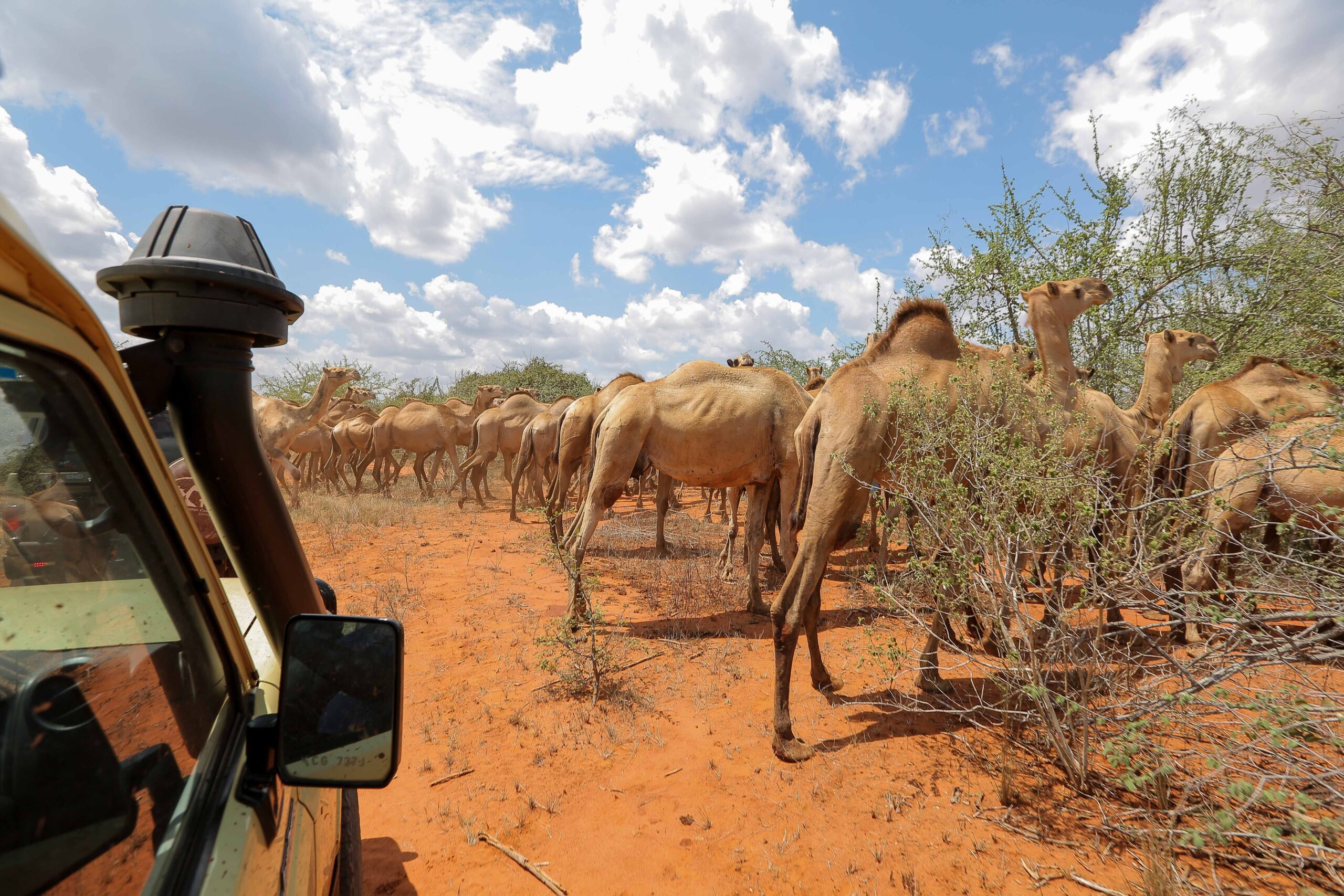
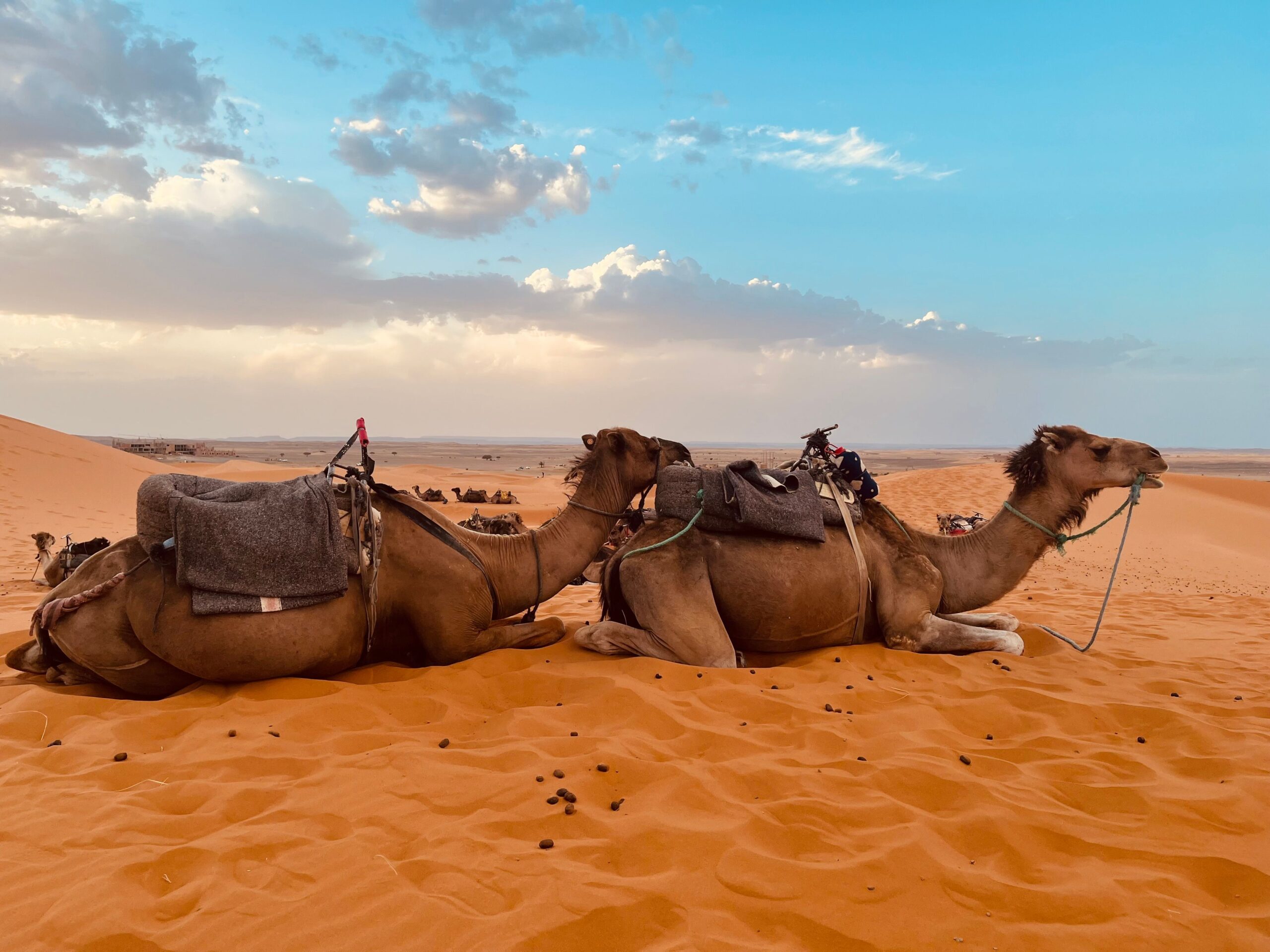
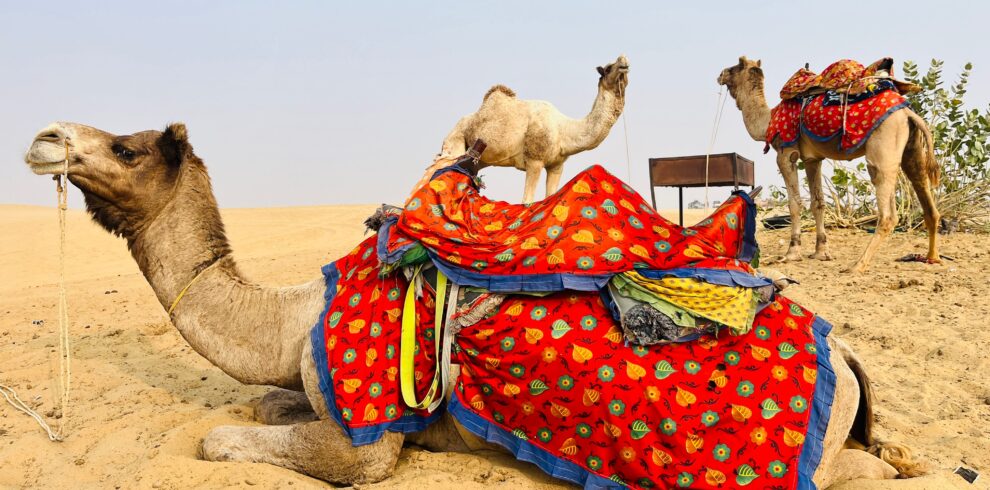
There is a version of safari that existed before engines, and this itinerary takes you back into it. For six days your vehicle disappears — left parked at the trailhead, needed by no one — and the expedition travels the old way: at the pace of a camel, across country that has barely noticed the century. A walking safari in the Samburu heartland is the gentlest radical act in East African travel. Each morning you strike camp without striking it — the camels carry everything, folding canvas kitchen, showers, water drums and all — and each evening they rebuild it somewhere new, beneath a tree chosen by your head guide for its shade and its view. Your days are measured not in kilometres but in encounters: a tracker crouching over leopard prints in the sand, a line of Grevy’s zebra standing in heat shimmer, a Samburu herder waving you toward a well, rock hyraxes heckling from a kopje. The route runs from the cedar forests of the Kirisia Hills across the great dry riverbed of the Milgis and into the granite folds of the Ndoto Mountains — elephant corridor country, walked with Samburu guides who grew up reading it. No vehicles, no crowds, no electricity but the kind the sky provides. This is safari reduced to its first principles: your legs, your guides, and the land.

Trip Highlights

  • Walk safari Africa’s original way — a camel train carrying camp, kitchen and water while you carry only a daypack
  • Five camps in five places, each pitched fresh under a guide-selected tree, rebuilt around you as you walk
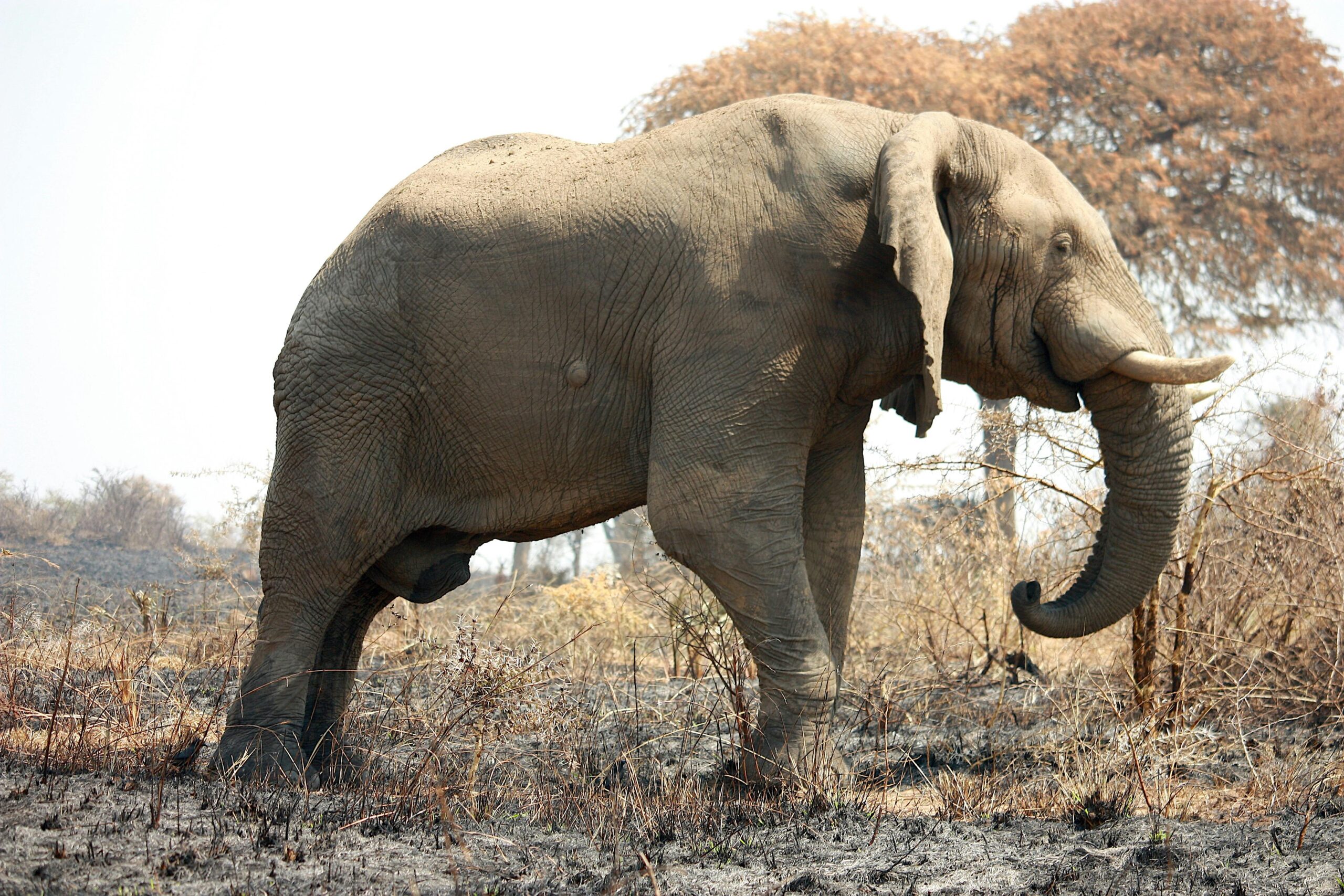
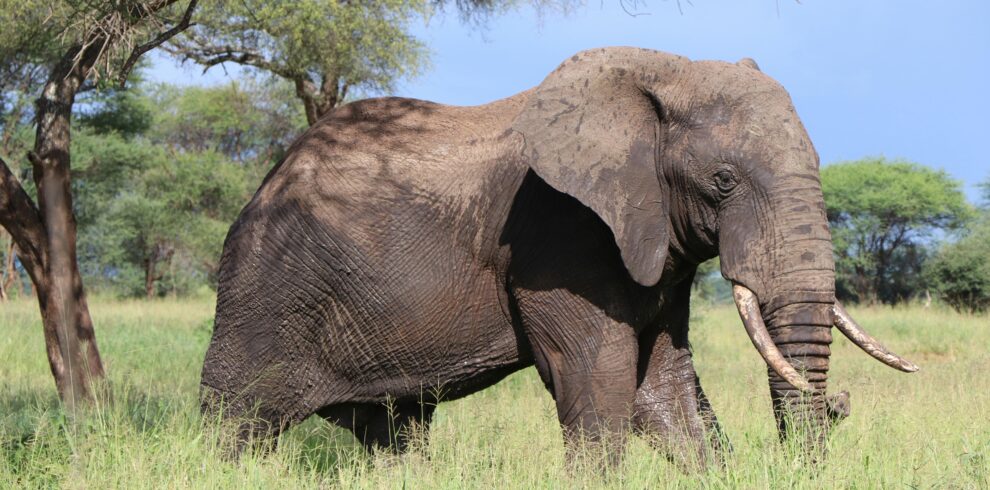
  • Cross the Milgis Lugga, the great sand river that carries elephants between the northern ranges
  • Track with Samburu guides and a licensed ranger — reading spoor, alarm calls and weather at walking pace
  • Sleep out on canvas beds beneath a sky that does not glitter so much as burn
  • Meet Samburu herders and their wells on their own terms, arranged ahead and welcomed properly
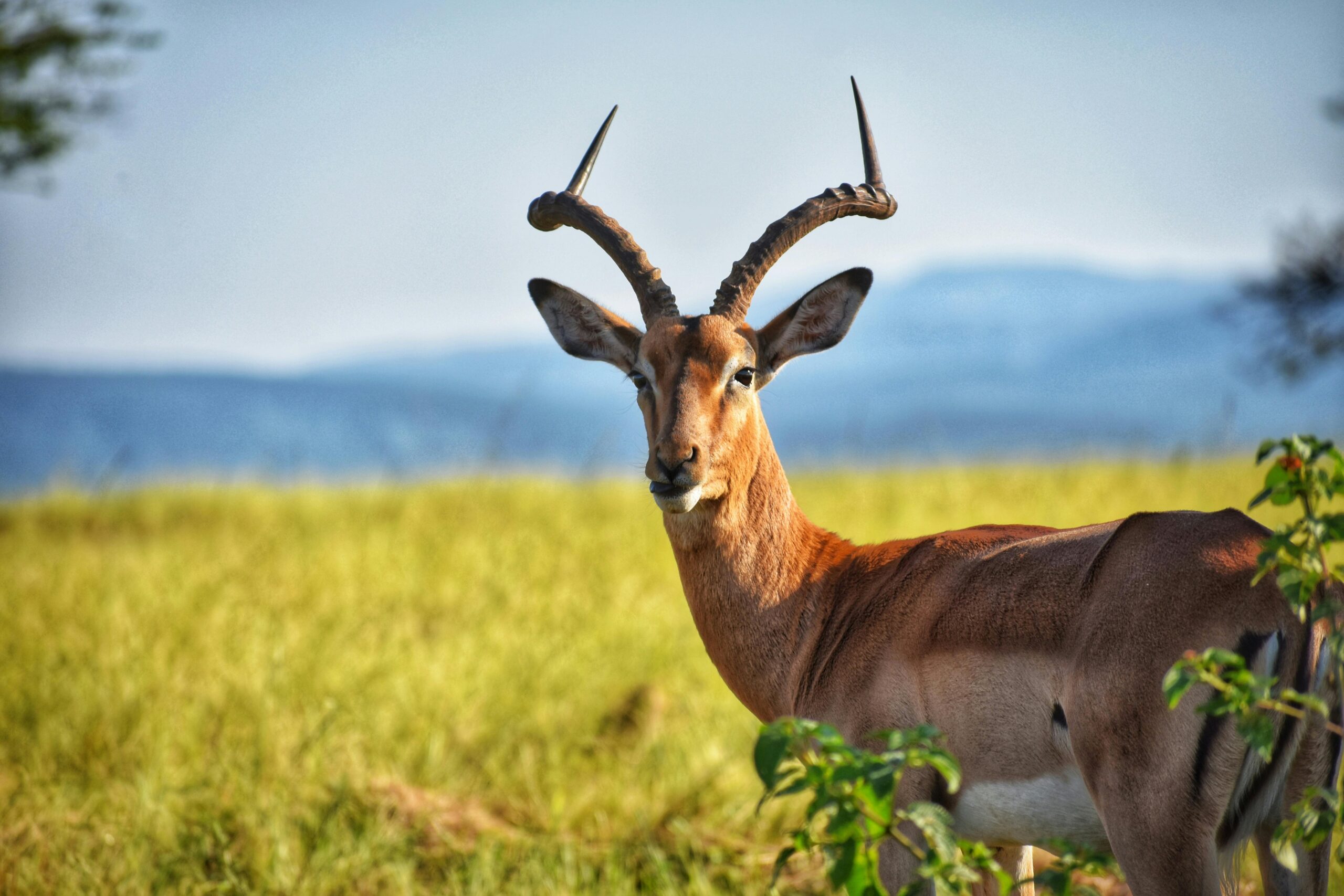
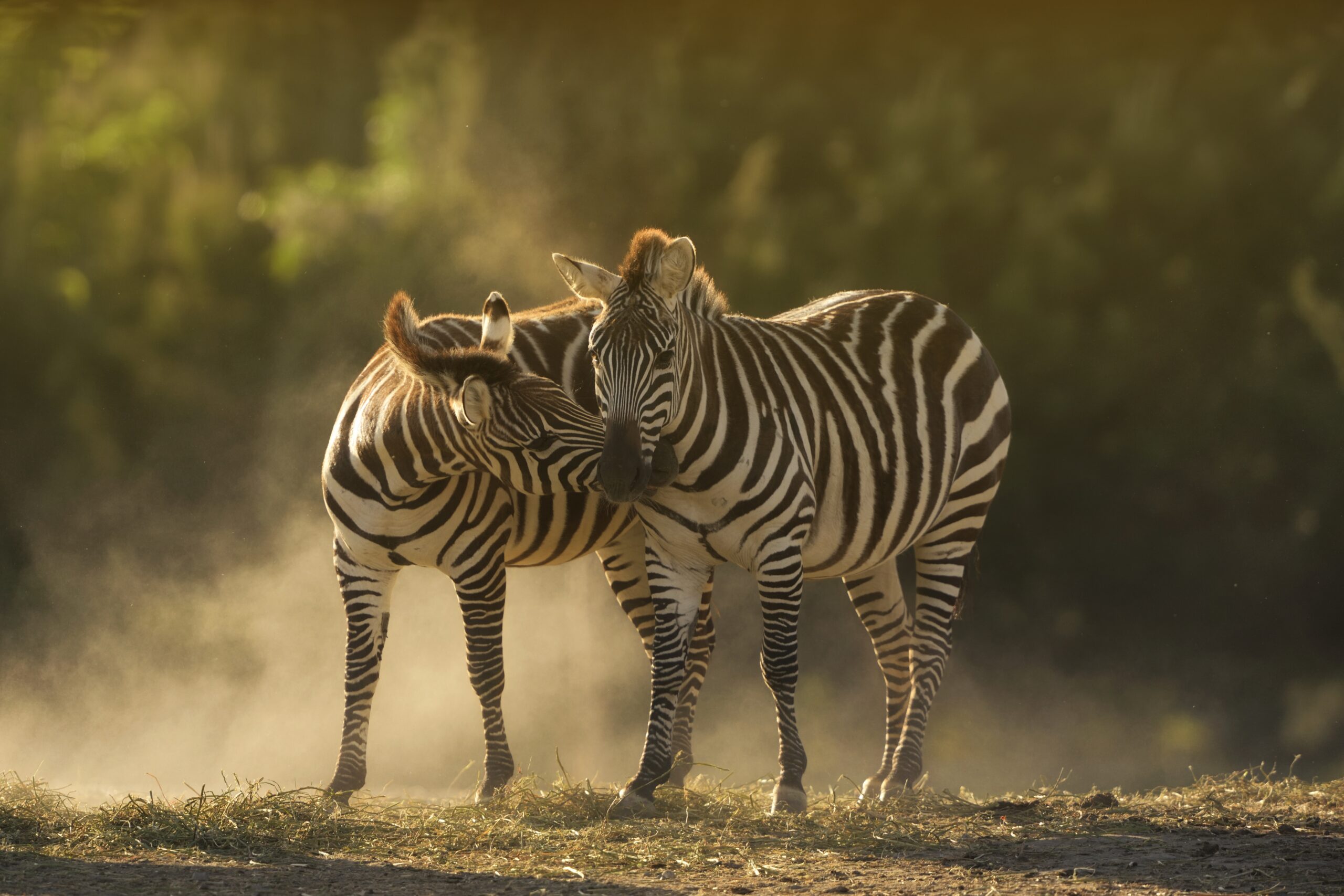
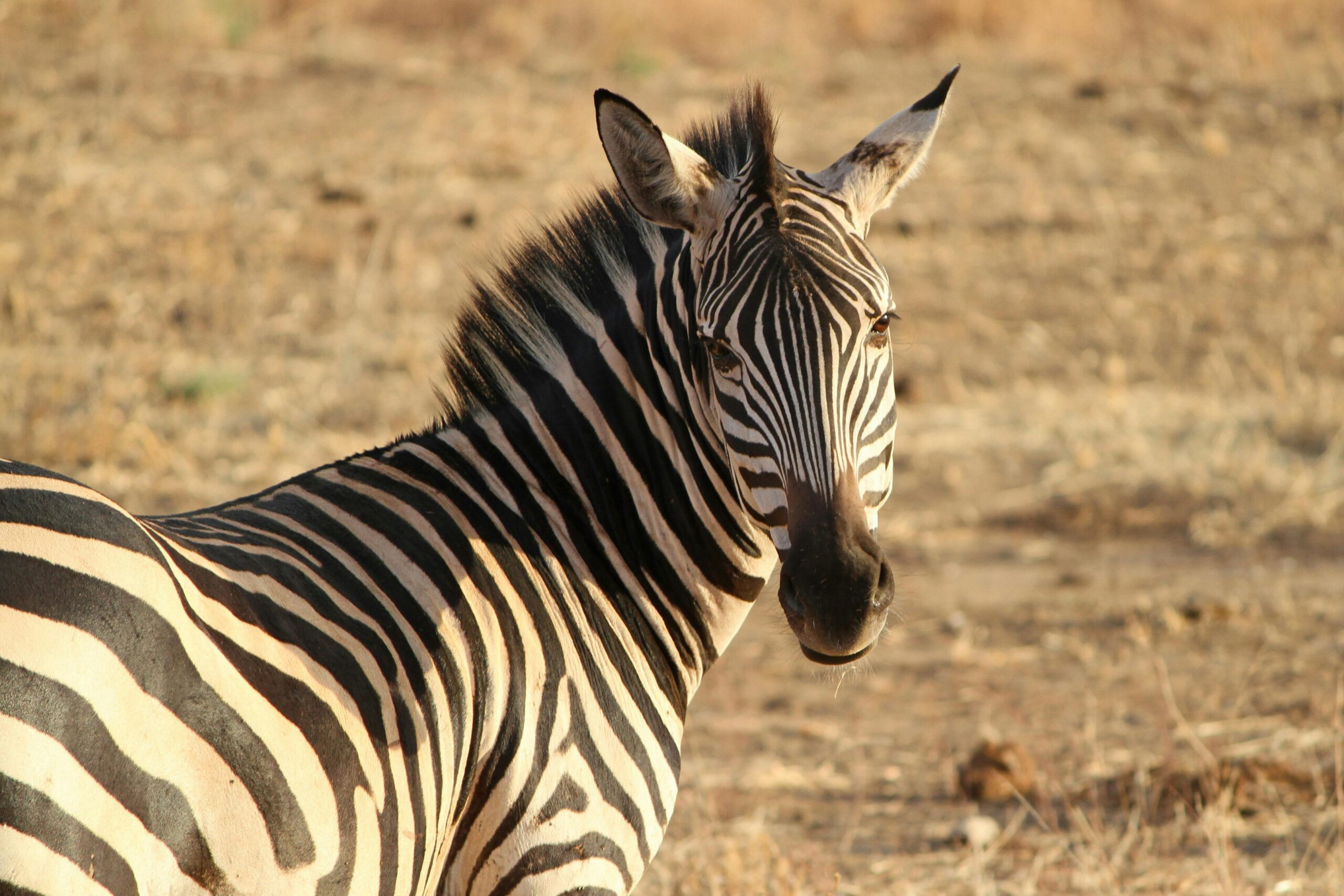
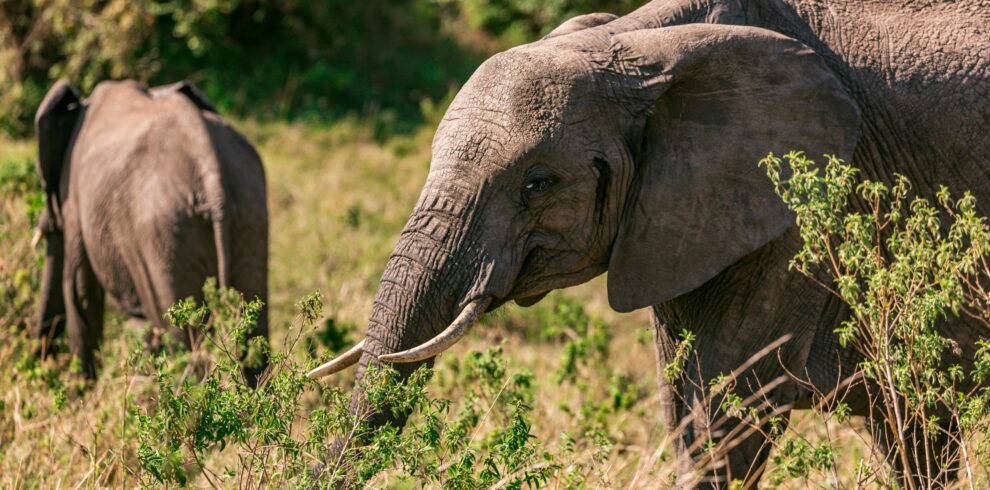
  • Elephant, Grevy’s zebra, greater kudu, oryx, gerenuk, klipspringer — met quietly, on foot, at respectful distance
  • A bird list that rewards every slow hour: golden-breasted starling, vulturine guineafowl, sandgrouse in their hundreds at the springs

At a Glance

Duration 6 days / 5 nights (4 nights on the trail)
Destinations Nairobi → Kirisia Hills → Milgis Lugga → Ndoto Mountains → Nairobi
Travel Style Camel-supported mobile walking safari — no vehicles on trail
Activity Level Moderate — 10–15km walking days at gentle pace
Best Season Jun – Oct (Dry, walking at its best) | Jan – Feb (Hot & clear)
Ideal For Active travellers, birders, photographers, walkers & anyone who has done every other kind of safari

Day-by-Day Itinerary

Day 1 — Nairobi → the Trailhead: Camel Bells at Noon

Your guide collects you from JKIA or your Nairobi hotel for the drive north — up through the Rift’s escarpment, past Nyahururu’s falls and onto the Samburu highlands, reaching the trailhead below the Kirisia Hills by early afternoon. (A flying option exists for tight schedules: Nairobi → Maralal by light aircraft on operating days, then a short road transfer to meet the train.)

At the trailhead, the expedition is already assembling: dromedary camels kneeling in the dust with their loads lashed, the crew greeting one another like the old colleagues they are, your head guide — a Samburu tracker of serious reputation — running the introductions and the walking briefing. Boots checked, water bottles filled, daypacks adjusted to nothing heavier than water, camera and rain of the day’s sun.

Then the first short walk: two or three easy hours at camel pace out of the farmland fringe and into the acacia scrub at the hills’ feet, the bell-caravan swaying ahead like a metronome. Camp is already up when you arrive — the advance crew walks faster than you think — with showers heating and the kettle on. First night: dinner by firelight, the Kirisia forest black against the last of the light, and the small, enormous realisation that no engine will carry you for four days.

Overnight: Walking Camp 1, Kirisia foothills.

Morning walking begins early, while the air still carries cool. The line forms the way it will every day: lead tracker reading the ground, head guide with guests, camel train behind, flankers watching the thorn country — and the day’s first lessons arrive quickly. A lion’s prints pressed into yesterday’s sand and already drying at the edges. Straw-coloured fruit bats pouring out of a fig tree. The alarm calls of baboons spelling out the direction something moved.

The route works out of the hills’ shadow across open plains and dry luggas — the sandy riverbeds that are this country’s roads and its pantries — toward a spring the crew has contacted ahead. Midday arrives with a long lunch in whatever shade the day’s tree provides: hammocks for the willing, the ground itself for the honest, and a swim if the spring runs.

Afternoon walk into Camp 2, pitched on rising ground with the plains falling away below. Before dinner, your guides run the evening’s informal class: stars, spoor, or Samburu botany, depending on the evening’s mood and yours.

Overnight: Walking Camp 2, the open plains.

Today belongs to the river that isn’t a river. The Milgis Lugga is one of the great sand rivers of the north — dry on the surface for most of the year, flowing underground for all of it — and it is the corridor down which elephant herds travel between the Kirisia, the Ndotos and the Mathews. Walking its sand is the trip’s signature: doum palms leaning over the bed, honeybees working the tamarind, and elephant tracks the size of dinner plates telling you exactly who passed, when, and in what mood.

The walking is soft and easy along the sand, and the day’s height comes from its detours — a climb to a granite viewpoint where klipspringer stand like ornaments, or a visit arranged through the crew to a Samburu homestead beside the lugga, where the welcome is unhurried and the milk is fresh. In dry months, the family’s well may be working: water drawn hand over hand for the cattle, in rhythm, as it has been for generations.

Camp 3 stands near the lugga’s edge. Tonight, if the sky is right — and here it usually is — your guides offer the option of sleeping out: canvas bed rolled onto the open sand, a fire burning low, and the crew’s night watchman a respectful distance off. The stars over the Milgis are the argument for the whole itinerary, settled in a single night.

Overnight: Walking Camp 3, the Milgis.

The country changes underfoot. The Ndotos announce themselves the way proper mountains do — granite domes shouldering out of the scrub, shadow suddenly a thing of substance — and today’s walk climbs gently into their lower folds, following goat paths and old elephant roads through country where greater kudu graze in twos and threes, their spiral horns thrown back against the rock.

The morning’s object is a spring the crew knows well: a seep in the rock shade where doves and sandgrouse queue in the heat and every animal in the valley has an appointment. Find a patch of quiet above it, sit still, and the show arrives on its own schedule.

Afternoon brings the walk down to Camp 4 in a broad sandy wadi below the cliffs — the trip’s most theatrical camp, ringed by rock and lit by the day’s last red. A climb to the sundowner rock before dinner, then the fire, and the noise the north makes after dark: bushbabies, eagle owls, the questioning cough of a leopard somewhere up the slope, none of it alarming, all of it true.

Overnight: Walking Camp 4, the Ndoto foothills.
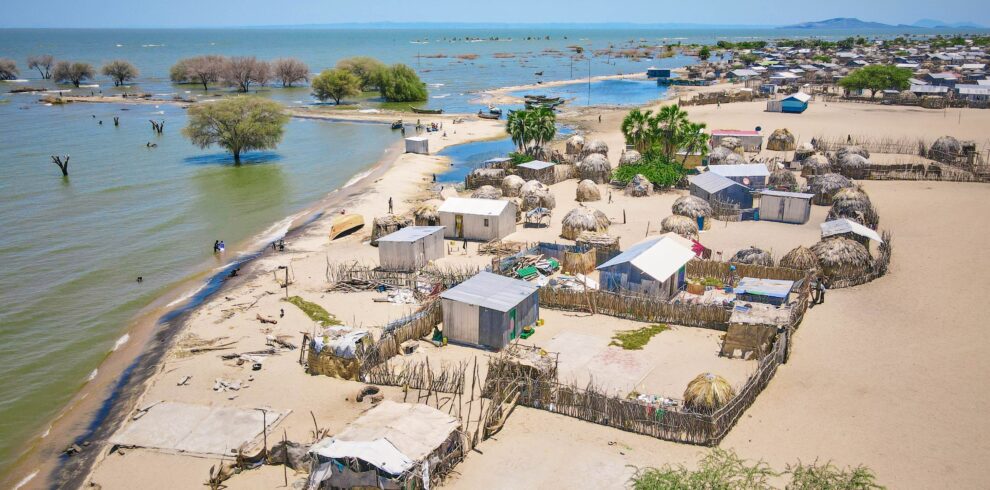
A morning boat run across open water to Central Island, an active volcanic furnace of craters rising from the lake — one of the three national parks that make Lake Turkana a UNESCO World Heritage Site. Three crater lakes sit inside it: Flamingo Lake, green; Tilapia Lake, where the fish are relict and found nowhere else; and Crocodile Lake, which explains itself. The island’s beaches are one of the world’s great Nile crocodile nurseries — tens of thousands of the reptiles breed here — and from the crater rim the whole sea lies open below, wind-lashed and endless.
Afternoon on land: Loiyangalani’s Desert Museum, telling the intertwined histories of the lake’s peoples, and then a walk to the El Molo — fisherfolk of the shallows, among the smallest communities in Kenya, whose coral-stone and palm houses once stood on the lake’s islands. Tea with the village elders, a demonstration of the hand-built reed vessels, and the hardest currency of the north: time, spent properly.

Overnight: Oasis Lodge (Luxury) / Palm Shade Camp (Mid-Luxury).

Breakfast, a late checkout, and the transfer to JKIA for your international departure. If the flight allows, the morning has room for the Giraffe Centre or the Sheldrick nursery — a gentle reintroduction to the century.

Your legs will carry a story home that no game drive ever gave anyone: the weight of a water drum rising on a camel’s back, a leopard’s cough in granite shadow, five camps and five skies. Walk again soon.

Accommodation Options

Luxury Tier

Karisia-Standard Mobile Camp (in partnership with Karisia Walking Safaris) The gold standard of East African walking safaris, run by the region’s most respected specialist. Walk-in canvas tents with real beds, linen and rugs; a dining tent and evening fire with canvas chairs; hot bucket showers on demand; a crew of Samburu handlers, cook and trackers that routinely outnumbers the guests several times over. The camels are locally owned — your walking holiday is their annual income — and the guiding is of a quality that turns every track into a lecture worth attending.

Mid-Luxury Tier

Classic Walking Camp (same route, same dates possible) The same country and the same crew philosophy, in a leaner canvas: dome tents with camp beds and mattresses, shared wash facilities, a mess area under the stars and the same kitchen producing three proper meals a day from the back of a camel. Guests often report that the lower tent walls make little difference — the ceiling is the same in both camps, and it is extraordinary.


Optional add-on (either tier): a lodge night before the trail (Sasaab or Sarara) and a Nairobi hotel night after, booked to wrap the walking days in comfort at both ends.


Destination Essentials

Best Travel Season

June – October: The walking safari’s season of choice. Dry ground, reliable spring flows managed by the crews, comfortable nights, and the well and homestead visits at their most active.

January – February: Hot, dry and gloriously clear — walking starts earlier and rests longer at midday, but the birding is superb and you will share the country with almost no one.

November – December: The short rains turn the plains green and gorgeous. Walking continues with a flexible schedule and waterproof boots; some routes shift to stay on firm ground.

March – May: The long rains. The luggas can flow and the tracks can fail. Walking safaris pause; this itinerary does not run.

Kirisia Hills

  • The north’s great cedar forest reserve — elephant stronghold, historical home of Samburu moran age-sets, and the green wall your walk begins beneath
  • Buffalo and bushbuck in the forest shade; leopard passing through

The plains & the Milgis Lugga

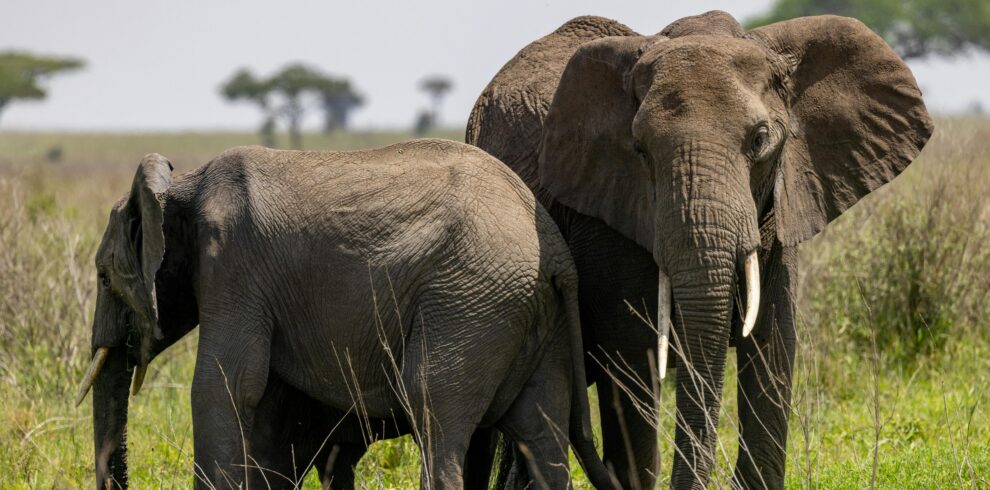
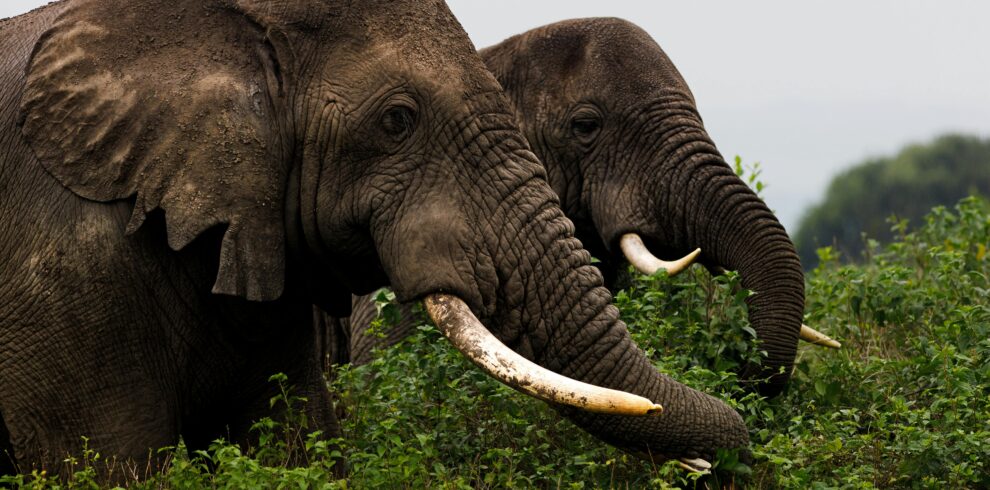
  • Elephant — the corridor’s regular travellers, met at distance and with great respect
  • Grevy’s zebra, Beisa oryx, gerenuk, lesser kudu and giraffe of the reticulated kind
  • Cheetah possible on the open flats; spotted hyena and jackal by night
  • Golden-breasted starling, vulturine guineafowl, Somali bee-eater, kori bustard and sandgrouse flights to the springs — a list that keeps serious birders very quiet and very happy

Ndoto Mountains

  • Greater kudu among the granite; klipspringer on the domes; rock hyrax in permanent session
  • Spring-fed seeps that gather every living thing in the valley by ten o’clock
  • Verreaux’s eagle over the cliffs
  • De Brazza’s monkey lives in the adjacent Mathews Range — ask about an extension that walks that forest too

The people & the camels

  • Samburu herders, wells and manyattas — visited by arrangement, never by ambush
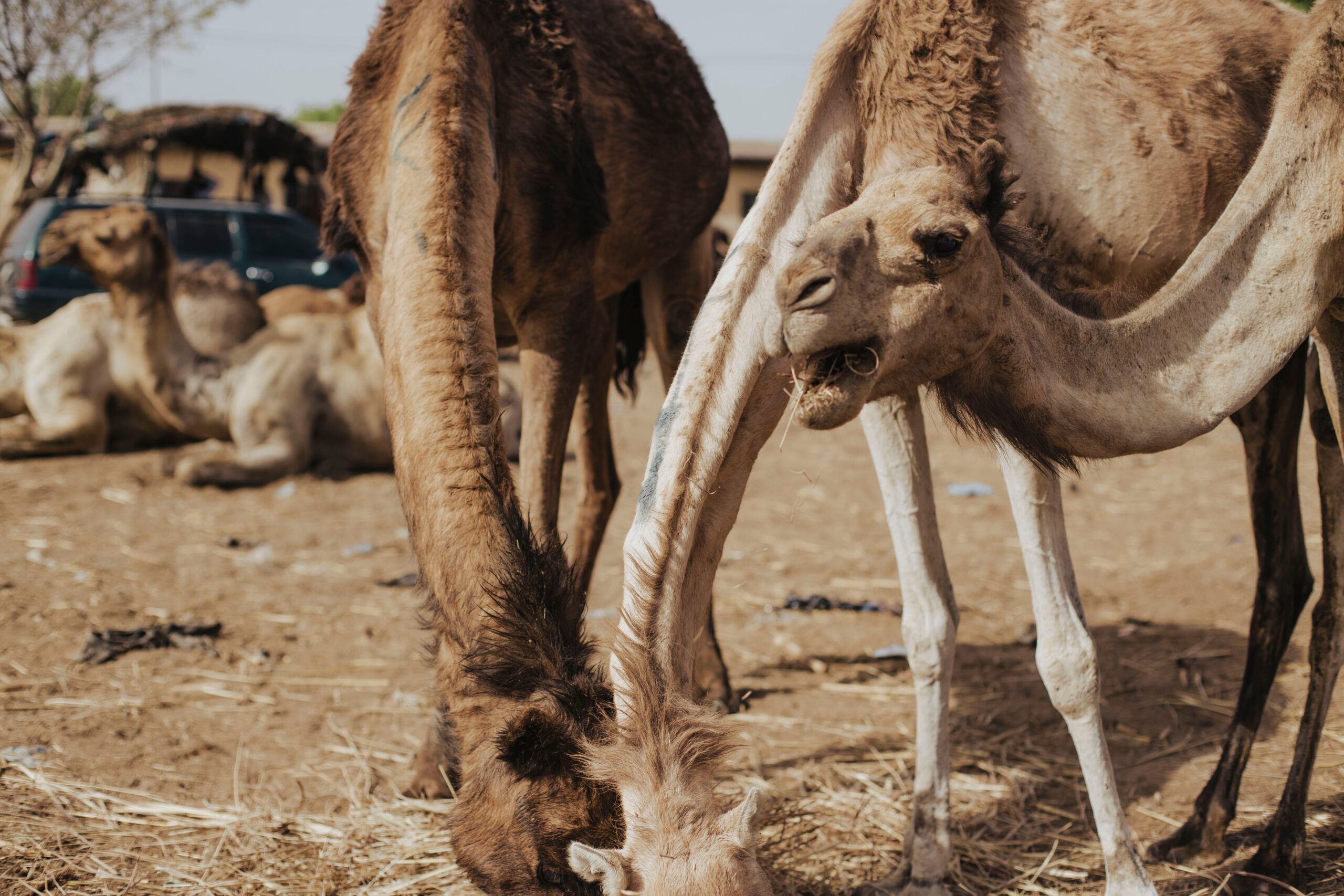
  • The camel train itself: locally owned dromedaries, staffed by handlers whose knowledge of their animals is generations deep, and whose employment is the route’s quiet conservation engine

Moderate — and honest about it: Walking days run 10–15km over roughly four to six hours at a pace set by the slowest guest, broken by long lunches and generous shade. The ground is mostly soft sand and flat scrub, with one gentler climbing day into the Ndotos.

No experience required: If you can walk a solid afternoon, you can do this safari. Trekking poles are available; broken-in boots are not negotiable.

The heat: Is the real opponent. Walking starts at dawn, stops midday and finishes short in the afternoon — the itinerary is built around the sun, not against it.

Please note: A licensed ranger walks with the group throughout, and all routes are cleared with local communities in advance. Guests walk where the guides walk and nowhere else.

What to Pack

Clothing

  • Broken-in, lightweight walking boots — the one item worth two of anything else
  • Neutral, breathable layers: olive, sand, stone; long sleeves for the sun, warm layer for the nights
  • A brimmed hat that survives wind, plus a buff for dust
  • Sandals or camp shoes for evenings; swimwear if the springs are running

Walking Essentials

  • Daypack with 2–3 litres of water capacity — drinking on the move is a skill this trip will teach
  • Trekking poles if knees vote in favour; a headlamp for camp nights
  • Binoculars — the walker’s greatest luxury, and this itinerary’s most-used tool
  • Sleeping bag liner if you plan to sleep out (bags and linen provided; personal liners are nicer)

Trail Comfort

  • High-factor sunscreen and lip balm; the equatorial sun does not negotiate
  • Wet wipes, hand sanitiser and a small towel — the whole hygiene system, elegantly simplified
  • Personal medication plus blister care; the crew carries the full first-aid kit
  • Power bank — charging exists at the fire’s discretion

Documents & Admin

  • Passport valid six months beyond your travel dates
  • Kenya eTA — apply at etakenya.go.ke at least two weeks out
  • Travel insurance covering walking safaris in remote areas — confirmed at booking
  • Copies of all booking confirmations; note the trail luggage limit of 12–15kg in a soft duffel, carried by the camels — everything else stays with the vehicle

Frequently Asked Questions

Do I need a visa to enter Kenya?

Yes. Most nationalities require an Electronic Travel Authorisation (ETA). Apply online at etakenya.go.ke at least 2 weeks before travel. The fee is USD 30 for most nationalities.

Meru is one of Kenya’s least-visited major parks — and that’s exactly the point. You’ll rarely share a sighting with another vehicle. The wildlife is equally impressive to more famous parks, and the atmosphere is completely different. It’s safari as it should be.

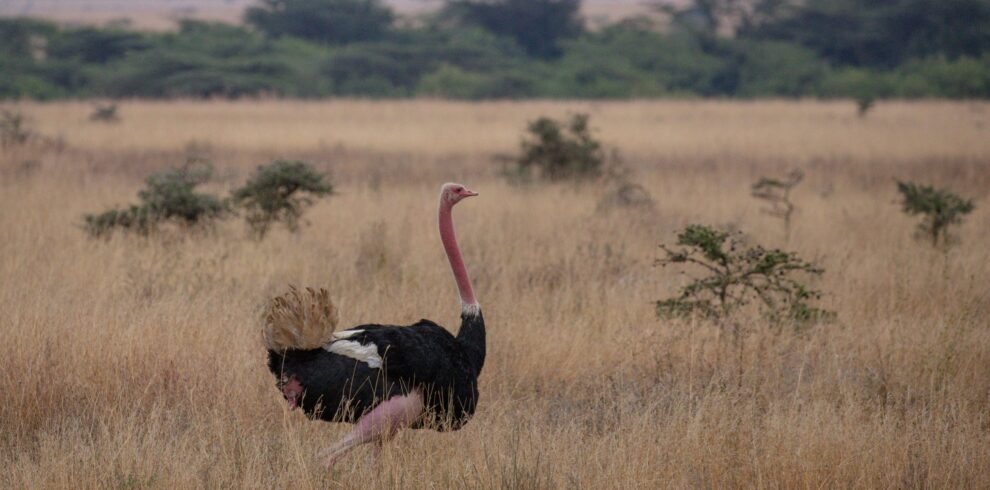
The Samburu Special Five — reticulated giraffe, Grevy’s zebra, gerenuk, Beisa oryx and Somali ostrich — are northern species not found in Kenya’s southern parks. They’re endemic to the arid north, making Samburu the only place in Kenya to reliably spot all five.

Yes — Ol Pejeta offers guided close-up encounters with Najin and Fatu, the world’s last two northern white rhinos. This is one of the most extraordinary wildlife experiences in Africa. Numbers are limited and advance booking is essential.

Nanyuki sits at around 1,900m altitude, so mornings and evenings can be genuinely cool, especially compared to Samburu or Meru. Pack a warm fleece or light jacket — you’ll thank yourself on early-morning drives.

Exceptional. Meru has over 300 species, Samburu over 450, and Ol Pejeta is equally rich. If you’re a birder, let us know and we’ll tailor the guiding accordingly.

Most light aircraft restrict luggage to 15kg (33lbs) in a soft-sided bag only — no rigid suitcases. This is a firm weight limit. All camps have laundry facilities so packing light is easy.

Yes. Game drives are suitable for all ages. Guided walks and rhino encounters are recommended for children aged 10 and above. Let us know in advance and we’ll adjust the pace and activities to suit your family.

The Kenyan Shilling (KES). USD is widely accepted at lodges and for tipping. Carry some cash for smaller purchases. ATMs are available in Nairobi and Nanyuki town.

Absolutely — this is our starting point, not a fixed route. We can add nights, swap lodges, combine with the Masai Mara or the coast, or build in specific experiences. Just tell us what you want and we’ll make it happen.

You can send your enquiry via the form below.

6 Days Camel Walking Safari Ndoto Mountains & Karisia Hills

Destination Type

Amboseli (5 Trips)

Chalbi Desert (1 Trip)

Diani Beach (2 Trips)

Kirisia Hills (1 Trip)

Lake Baringo (1 Trip)

Lake Bogoria (1 Trip)

Lake Naivasha (1 Trip)

Lake Turkana (1 Trip)

Marsabit (1 Trip)

Masai Mara (4 Trips)

Mathews Range (1 Trip)

Milgis Lugga (1 Trip)

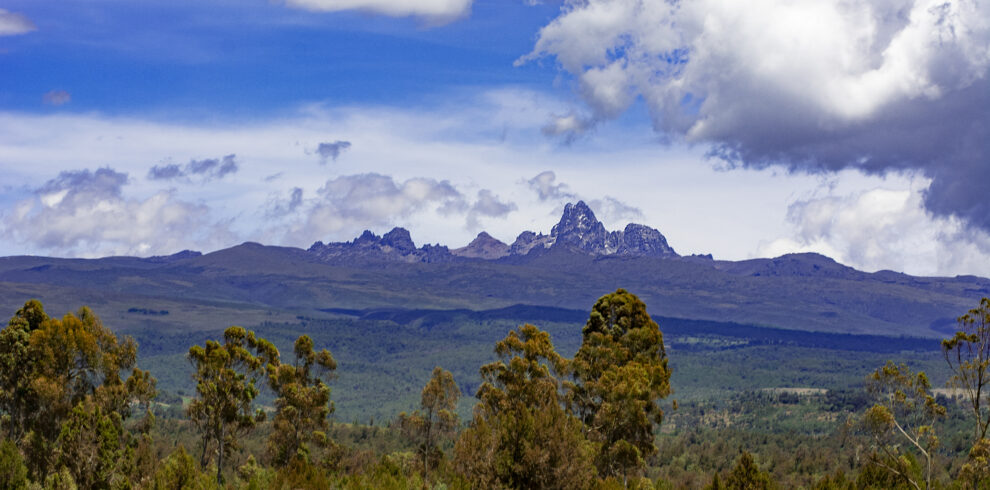
Mount Kenya (1 Trip)

Activity Type